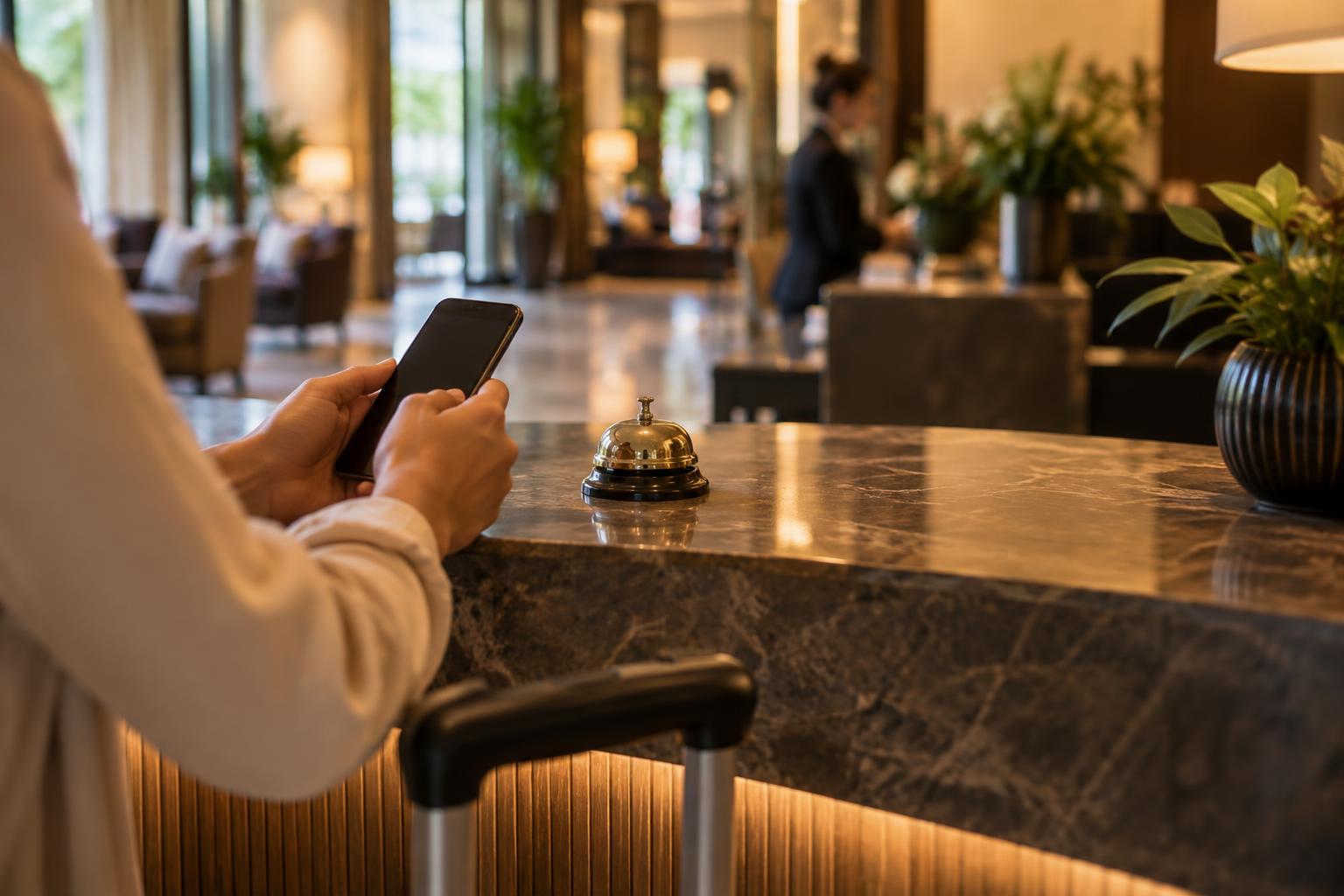
When a guest is considering writing to you, they almost never start with the form. They start from the question of whether it is worth risking time and money on a stranger. They look for the answer in several places at once: in the reviews of the property, in the photos and in the way the owner talks to people. This article looks at the three together, because that is how the guest reads them.
A guest does not read one signal but cross-checks several
A single review can be a one-off. A single photo can be hand-picked. A single polite reply can be a template. That is why the guest looks for a match. If the reviews keep saying that the rooms are clean and quiet, and the photos show exactly such rooms, the story holds together. If the reviews talk about a cold bathroom and the website says “luxury accommodation”, the story falls apart, and the guest does not ask but closes the page.
Think about what goes through the mind of a person who has no way of visiting you beforehand. They cannot touch the sheet, hear the street or see the yard. They gather circumstantial evidence and decide whether the risk is acceptable. An enquiry is a small step, but it is still a step towards a stranger.
Reviews: what guests read between the lines
The reader does not look only at the overall rating. They often read a few of the latest reviews and one or two of the more critical ones, to see what kind of problems there are. They distinguish the minor (“a bit noisy on the street”) from the serious (“we were not greeted”). They also look at whether the reviews come from people like them: a family, a couple, a group of colleagues.
That is why it is useful to read your own reviews as a reader, not as an owner. Write down the three things most often repeated positively and the three most often repeated critically. The first group is what to put in a prominent place on your website and in your conversations. The second is work to fix, not to justify.
Photos: evidence, not decoration
Photos tell a guest whether what they have seen is true. The guest compares what you show with what people write. Real photos of the rooms, including the bathroom, and of the common areas are reassuring. Over-edited photos in which the room looks twice as big create an expectation that the reviews later disprove.
A few practical questions to ask about your own photos:
- Do they show the rooms you actually sell, or only the nicest one?
- Is there a photo of the bathroom, the view and the entrance?
- Are they up to date: the same bed, the same curtains, the same yard?
- Do they match what guests mention in the reviews?
The bad news is that an outdated photo does not go unnoticed. The good news is that the fix is cheap: one afternoon with a phone in good light.
The owner’s replies: who they are really for
What is least often realised is that the reply to a critical review is not for the dissatisfied guest. They have already decided. The reply is for the next reader, who is watching how you behave when something is wrong. A calm, specific and non-defensive reply shows a person you can talk to.
A good reply has three parts: thanks for the feedback, acknowledgement of the specific problem without excuses, and a clear statement of what has been changed or what will be done. A bad one is the template “Thank you for your review, we hope to see you again”, posted under every review, or an argument with the guest in front of everyone.
A short example of an approach, not something to copy: if a guest writes that they waited a long time for check-in, the reply can acknowledge that the arrival did not go as it should have, briefly explain what has changed in how guests are received, and stay polite. No excuses along the lines of “guests sometimes do not understand”.
What you should not do
The temptation to improve the picture with invented or commissioned reviews is real, but it carries more risk than benefit. The reader often picks up on identical phrases and suspiciously smooth stories, and platform rules and consumer laws change, so check what is permitted for your property. The safer path is a different one: ask real guests, once they are satisfied, to share their opinion, and reply to all reviews, not only the good ones.
How it all connects to the enquiry
A guest usually moves through these places in a different order: they search for the property, read reviews, open the website, look at the photos, go back to the reviews and only then decide whether to write. Every mismatch is a reason to pause. Every match is a reason to stay. So your job is not to collect praise but to make sure that the things the guest sees in different places resemble one another.
The last step helps too: when the guest decides to write, the way to the form must be clear and the reply must arrive on time. A quick, accurate reply to the enquiry is a continuation of the same signals of trust.
Where ISKA Website can help
If you want the photos and descriptions of your rooms to be on your website and to update them yourself, ISKA Website makes this possible: rooms with photos and an optional “from” price, services, a gallery, offers and an enquiry form. Changes are drafts that are reviewed and published, and you can go back to a previous version. An enquiry is not a reservation and does not hold a room. ISKA Website is offered by individual quote.
A small one-hour review
- Read the ten most recent reviews of the property and write down what repeats.
- Compare what they describe with your photos and with the text on the website.
- Replace one photo that does not match reality.
- Write or correct the replies to two critical reviews, following the three steps above.
- Ask at reception which questions guests ask most often before they arrive, and check whether the website answers them.
Trust builds slowly and is lost quickly, but keeping these three things in order is in the owner’s hands.