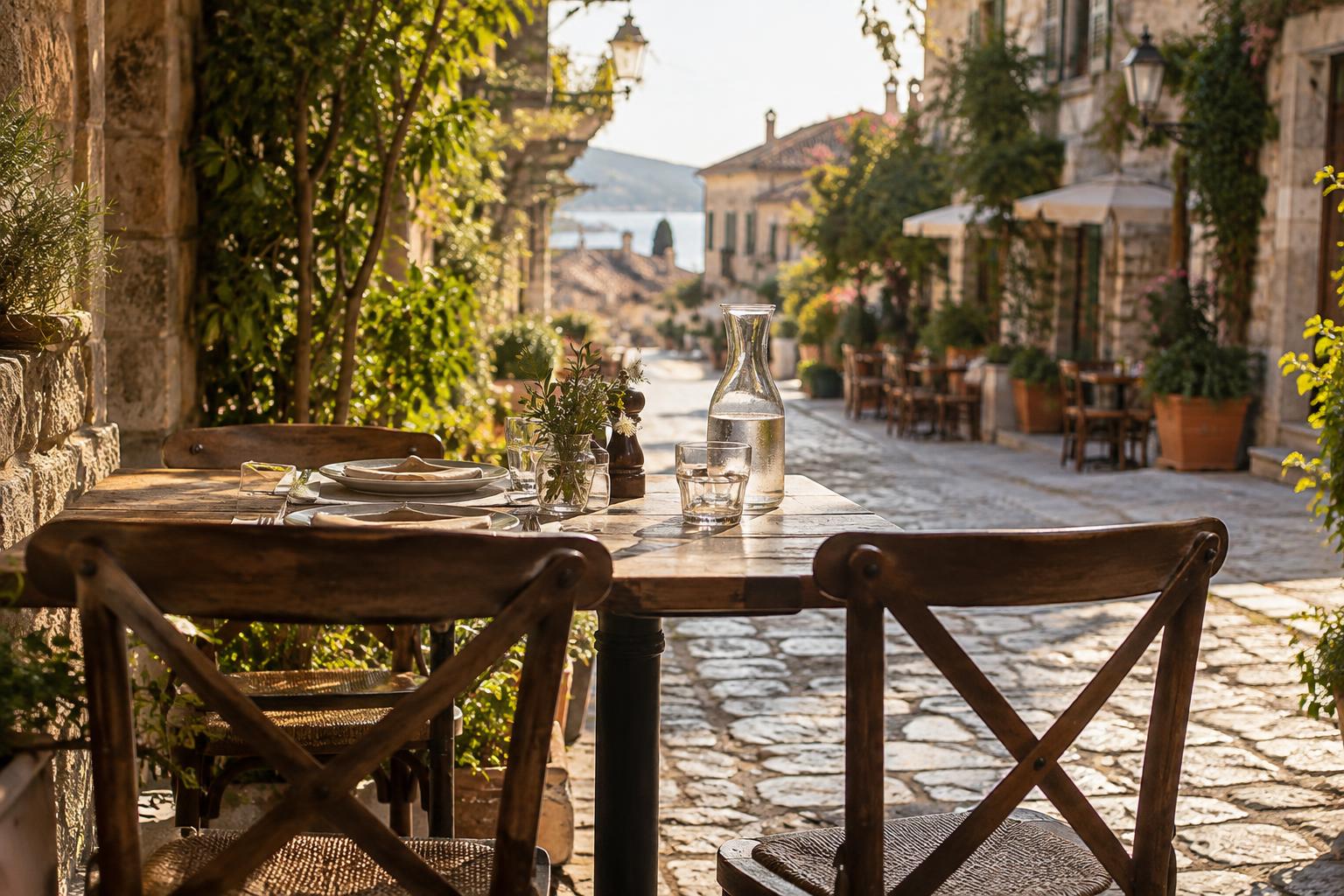
On a Friday evening, a family who have been coming here for years sit at one table. They do not open the menu; they ask the waiter what is on today. At the next table are two guests from another country. They hold the menu, read slowly and quietly wonder what “kyufteta po chirpanski” is and whether the portion is for one person. The venue is the same, the kitchen is the same, the menu is the same, but the two tables read it as two different documents.
Many owners solve this problem in the most obvious way: they make a second menu for foreigners. Soon they are maintaining two lists, and the prices and dishes in them drift apart. This text suggests something else: to understand what each of the two audiences is looking for and to find the few shared rules that serve them both with one menu.
How the local guest reads
The local knows the venue and the kitchen. For them the menu is not a guide but a reference. They look for three things.
- What is new or what has changed since their last visit.
- How much something costs, especially if prices have changed.
- What is on today: a lunch offer, the dish of the day, something that has run out.
The local is impatient with long texts. They do not need an explanation of what a shopska salad is. If they have to flip through pages to reach the lunch menu, they will call the waiter, and that is your team’s time. The local is also the strictest auditor of prices: if the menu on the phone shows an old price, they will say so out loud and at the till.
How the tourist reads
The tourist, Bulgarian or foreign, does not know the cuisine. They look for other things.
- What the dish is: the names are often local, and a literal translation does not help.
- How big the portion is and whether it is for one person or for sharing.
- The main ingredients, especially meat, fish, nuts, dairy, spicy heat.
- How to order and how to pay, if they do not speak the language.
If the tourist does not find an answer in the menu, they have three options: ask the waiter, order at random, or choose something familiar and safe. The first burdens the team, the second brings dissatisfaction, and the third means your most characteristic dishes go unordered.
Where the two audiences meet
The argument “for locals or for tourists” is misleading, because most clarity rules work for everyone.
- A one-sentence description does not bother the local. They skip it in a second. For the tourist, however, it saves a question.
- A visible price and clearly arranged sections help both: nobody likes searching.
- A marked dish of the day and lunch offer matter to the local, but the tourist understands them too, if they are put simply.
- Clearly stating the portion and the main ingredients is not a “tourist” convenience but simply good practice, which the local also appreciates when bringing guests.
The difference is in depth, not in content. The local stops at the title; the tourist reads the description beneath it as well. That is why the structure is the same: title, price, one short sentence. Whoever wants more reads it; whoever does not skips it.
Five rules for one menu for both audiences
- Arrange it the way people dine: salads, main courses, desserts, drinks. Not the way the kitchen is organised.
- Give every dish a name that can be understood, and a short description next to it. For familiar dishes, the description can be three or four words.
- State the portion and the main ingredients where guests ask most often. For allergens, check what is required for your venue and keep them with the dish itself.
- Put at the top what changes: the lunch menu, the dish of the day, the seasonal offer.
- Keep one source of truth. If a price changes, it changes in one place, not in two files.
How to start without rearranging everything
You do not need to rework the whole menu at once. For one week, write down the questions the waiters hear most often from guests. There are usually about ten dishes that get explained again and again. Start there: add a description and a portion size to those only. That way the descriptions go exactly where they are missing, and the menu does not become overloaded.
Then look at languages. If guests come from a particular country, start with its language. You do not need to translate everything at once. It is better to have a few dishes translated and explained well than the whole menu translated literally. Also read how to prepare a menu for foreign guests.
Where a digital menu helps
One and the same list, kept in one place, is the biggest benefit of a digital menu for a venue with two audiences. In ISKA Menu, the menu is edited from the portal or from a phone, changes are a draft until published, and the link stays the same. The guest opens it in the browser, without an app. The free plan is a basic menu in Bulgarian. The Plus plan adds one QR code, photos, a lunch menu, up to four languages and a menu for print, so the tourist reads in their own language and the local sees the same up-to-date menu. Plan prices are on the pricing page.
This does not replace good descriptions. If the text is poor, it will be poor on the phone too. The tool only keeps one list instead of two.
When two different menus still make sense
There are cases where separating them is justified: if in the same room you offer genuinely different things, for example a separate menu for groups or a set menu for a coach party. These are different offers, not different translations of the same menu. Even then, it is good for them to be managed from one source and for it to be clear which version is the current one.
What to check this week
- Ask the waiters which five dishes they explain most often.
- Read the menu on your phone as if you were a stranger: do you understand what you are ordering and how big the portion is?
- Check whether there are two versions of the prices or the dishes, and who maintains them.
- Decide which languages you really need, based on the guests who come to you.
A menu that the local scans in five seconds and the tourist reads at leisure is not a compromise. It is the menu that works for both.